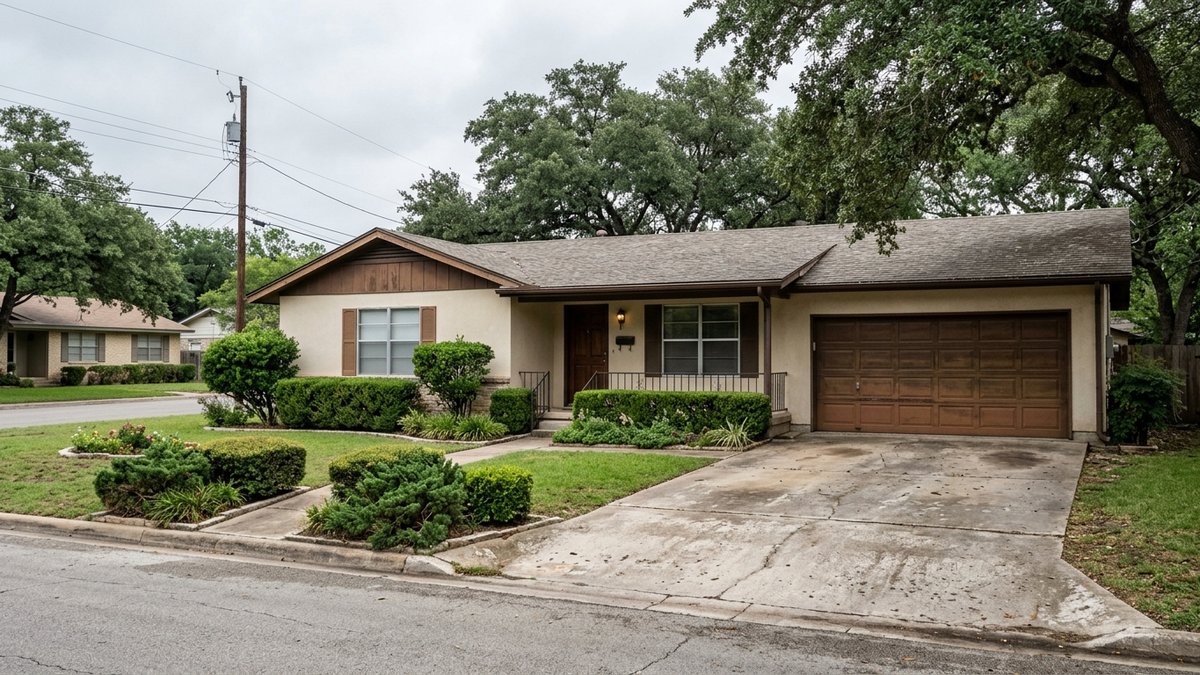
What should you do if your New Braunfels listing goes stale?
Start with a diagnosis, not another week on the market. Compare the listing with the homes buyers can choose today, review repeated showing objections, and sort the evidence into five areas: price and buyer payment, condition, presentation, location or layout, and transaction terms. Then choose the smallest coordinated reset that addresses the strongest gap.
A stale listing is not defined by one universal day count. The warning sign is a failure to convert attention into useful next steps. That may look like few showings, showings with no second visits, repeated questions that never get resolved, or buyers choosing competing homes after touring yours. The right response depends on where the conversion breaks.
A token reduction can leave the real problem untouched. If buyers see a condition issue, a confusing room, an outdated photo set, a fixed lot limitation, or uncertainty about the transaction terms, a small price change may not make the overall package more convincing. A seller needs to know whether the price is wrong, whether the value is hard to see, or whether buyers are discounting the property for a risk that has not been addressed.
The goal is a documented relaunch. Recheck the comparison set, confirm what the feedback actually says, address fixable presentation or condition issues, prepare accurate information, and update the price or terms when the evidence supports it. The revised listing should give buyers a clearer reason to choose it over the alternatives in the same New Braunfels search.
How can you tell whether a New Braunfels listing is stale?
Look for a pattern in buyer behavior rather than reacting to the calendar alone. A listing deserves a closer review when it has had enough exposure to produce meaningful feedback but buyers keep stopping at the same point. The issue may be visibility, the in-person showing, the comparison with other homes, or uncertainty about what happens after an offer.
Current Texas data gives useful context without creating a New Braunfels deadline. Texas A&M’s Texas Real Estate Research Center reported rising inventory and longer marketing times in its Summer 2026 housing report. It also reported a typical 5.6 percent reduction from original asking price in San Antonio during the first four months of 2026. That is regional context, not a recommended reduction for a particular New Braunfels home.
Its August 2026 Texas Housing Insight reported that unsold inventory at the end of June averaged 90 days, nearly 30 days longer than homes that sold. The same report noted median seller price cuts of $12,000, or 3.3 percent. These figures show why stale listings deserve a real review, but they do not prove that a seller should wait 90 days or copy a percentage. The subject home’s location, condition, price band, property type, and current competition still control the comparison.
Use these signals to start the review:
- Few or poor-quality showings: Buyers may not be finding the listing, or the online price and presentation may be filtering out the right audience.
- Showings without follow-up: Buyers may see a mismatch between the listing promise and the home, or a risk may be reducing confidence.
- Repeated objections: Similar comments about price, repairs, layout, documentation, or terms deserve more weight than one isolated preference.
- Stronger new competition: A new listing, builder incentive, or updated competing home may have changed the comparison buyers are making.
- No clear next action: If the seller cannot explain what changed after the last feedback cycle, the listing may be collecting activity without learning from it.
The New Braunfels buyer and seller market guide can provide broader market context. Use the current comparison set and feedback ledger to decide what the subject property needs now.
Which evidence should you review before changing the price?
Review the full buyer comparison before deciding that price is the primary problem. A listing can be priced near its competition and still feel expensive if the buyer expects more condition, clearer information, better presentation, or more workable terms at that number. Price and perceived risk are evaluated together.
Build a five-bucket objection ledger
Record what buyers and their agents actually raised after each showing. Add the competing property when that information is available, then note whether the issue is fixable, documented, and material to the buyer’s choice.
- Price and payment: Which homes are buyers comparing at the same budget? Is the concern the list price, the total buyer cost they need to verify, or the work they expect to add after closing?
- Condition: Are buyers repeating concerns about paint, flooring, odor, deferred maintenance, a major system, or a repair record? Separate a visible issue from a question that needs qualified inspection or professional review.
- Presentation: Do the photos show the home accurately? Are rooms clear, bright, and easy to understand? Did the in-person showing reveal a mismatch between the marketing and the actual experience?
- Location or layout: Is the objection tied to a fixed feature such as a lot, road, stairs, privacy, room arrangement, or distance from the buyer’s preferred area? A fixed trade-off may need a more precise price and buyer strategy.
- Transaction terms: Are buyers asking about closing timing, concessions, repairs, documents, or another term that needs review by the appropriate real estate, lender, title, insurance, or legal professional?
Do not treat every comment as a mandate. One buyer may reject a feature that another buyer values. Repeated comments from otherwise serious buyers are more useful, especially when they point to the same comparison or risk. A seller should also check the quality of the evidence. A vague statement that the home felt expensive is weaker than a specific comparison with a nearby property that offered better condition at a similar price.
For each repeated objection, write down the evidence, the response available to the seller, the expected timing or cost of that response, and what would show that it worked. This turns feedback into a plan. It also helps prevent a seller from making a price change when the real problem is an unresolved condition, documentation, or presentation issue.
Should you lower the price, make repairs, or relaunch the listing?
Usually, a stale listing needs a coordinated reset rather than one isolated edit. The correct mix depends on the evidence. A price change can address a real value gap. Focused repairs can remove a repeated visible objection. New photos can correct an inaccurate or weak presentation. Clear records can reduce uncertainty. A permitted concession or term change may address a specific buyer constraint, but the appropriate professionals must verify what applies to the transaction.
Use this comparison before choosing the reset:
| Evidence pattern | What it may mean | Reset to evaluate |
|---|---|---|
| Few showings after a price or presentation review | Buyers may be filtering out the listing before touring | Compare search position, photos, description, and price with current alternatives |
| Showings mention the same visible issue | The in-person experience is creating a predictable objection | Address the focused condition or presentation issue, then update the marketing |
| Buyers prefer updated homes at a similar price | Price and condition are being judged together | Compare targeted work with a meaningful price position change |
| Buyers ask for records or question a major system | Uncertainty may be reducing confidence | Gather accurate records and direct technical questions to the qualified professional |
| Buyers like the home but need different terms | The overall transaction structure may be the obstacle | Review permitted options with the appropriate transaction professionals |
The pre-listing repair budget guide can help separate decision-useful work from an open-ended renovation list. If the photos no longer represent the home or the property has changed, review professional photography for New Braunfels sellers as part of the reset.
Do not copy a regional reduction percentage without checking the home’s actual comparison set. TRERC’s 5.6 percent San Antonio figure and its $12,000 or 3.3 percent median seller cut are useful evidence that meaningful reductions occur in the broader market. They do not establish the right number for a New Braunfels property. The adjustment should reflect the value gap that the seller can document.
A relaunch should change the buyer’s comparison in a way that can be explained. If the seller changes price, condition, photos, and terms at the same time without a reason for each change, the next feedback cycle will be difficult to interpret. Tie every change to an identified objection or comparison problem.
When is the listing ready for a coordinated relaunch?
Relaunch when the listing package is materially more competitive and the seller can explain why. That means the current alternatives have been reviewed, the main repeated objections have been sorted, the chosen response is complete or accurately documented, and the price, photos, description, and terms tell the same story.
Before going live again, use this checklist:
- Compare the home with active and recently changed alternatives in the relevant New Braunfels price band and area.
- Identify the one or two objections that most often stop buyers from moving forward.
- Decide whether each objection calls for a price change, focused work, better information, improved presentation, or a term review.
- Update every part of the listing affected by the change. Do not use old photos after a material condition or staging change.
- Set a review point and decide which behavior will count as improvement, such as stronger showing quality, repeat visits, document requests, or offers.
A stale listing is a decision problem before it is a calendar problem. If the package still loses the final comparison, more exposure may only produce more of the same feedback. If the seller makes a documented reset and watches the next buyer behavior carefully, the listing can produce better information about what needs to happen next.
For a property-specific review of the comparison set, showing feedback, and possible listing reset, contact Glen Robison.