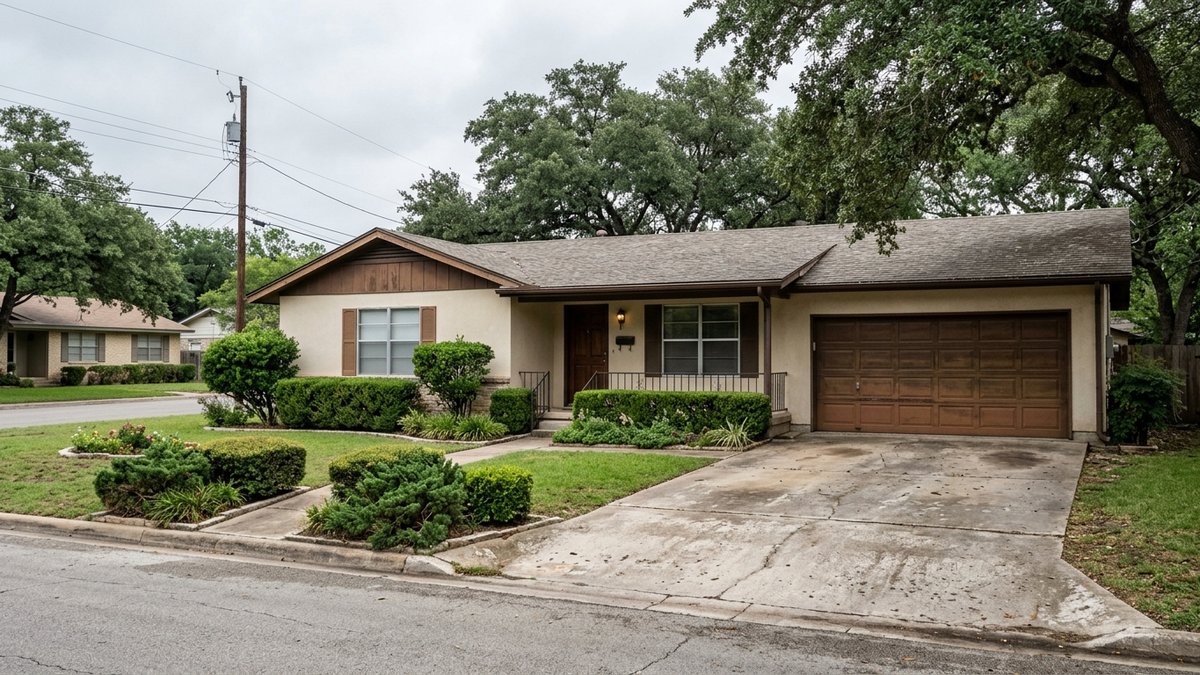
What should New Braunfels sellers budget for closing costs?
Start with a realistic range, not a perfect number. For many New Braunfels sellers, total selling costs land somewhere around 6% to 10% of the sale price when commission is included.
That range is not a promise. It is a planning guardrail. The final settlement statement depends on the actual contract, the title company, tax prorations, HOA charges, repair credits, and the closing date.
Clever’s Texas seller closing cost data puts seller closing costs before commission around 3.28% of the sale price. On a $400,000 sale, that points to about $13,120 before commission.
Once you add commission and other negotiated items, the number changes fast. Local New Braunfels guidance also uses a broad 6% to 10% total selling cost range, with commission usually being the biggest line item.
I would not use a statewide average as your final answer. A home near Gruene, a Canyon Lake property, a Garden Ridge acreage home, and a standard New Braunfels subdivision home can all carry different fees and negotiations.
Use the range to decide whether selling is worth exploring. Then build a property-specific seller net sheet before you spend money on prep or sign a listing agreement.
Which seller costs usually make the biggest difference?
Commission is usually the largest cost. Many planning examples use 5% to 6% of the sale price for total commission, but the actual number comes from your listing agreement and the compensation terms in the deal.
After commission, look at title and escrow charges. Texas sellers often pay for the owner’s title policy when the contract is written that way. Other title charges, recording fees, courier fees, and escrow items can also appear on the closing statement.
Property taxes deserve close attention in Comal County and nearby areas. Taxes are usually prorated at closing based on the part of the year each side owns the home. The closing date can change that credit or debit.
HOA items matter if your property sits in a managed community. You may see transfer fees, resale certificate charges, statement fees, or other association costs. Those do not apply to every home.
Concessions can also change the seller’s net. A buyer may ask for help with closing costs, a rate buydown credit, a home warranty, or a repair credit after inspection.
That is why I like sellers to see more than one scenario. A strong selling plan should show the likely case and the conservative case, not only the best-looking number.
How does a $400,000 sale price turn into a real net number?
Here is the clean way to think about it. Sale price is the top line. Net proceeds are what you expect to receive after your payoff and seller costs come out.
If a New Braunfels home sells for $400,000, the 3.28% non-commission estimate from Clever points to about $13,120 in closing costs before commission. If total selling costs land near 8%, that same sale could carry about $32,000 in selling costs.
That still does not tell you the check amount. Your mortgage payoff comes out too. If your payoff is $255,000 and selling costs are $32,000, the estimated cash at closing would be about $113,000.
That number can move. A $5,000 repair credit lowers it. A higher title charge lowers it. A lower commission structure may raise it. A tax proration can move it either direction.
This is where sellers get tripped up. Closing costs are not the same as net proceeds. Net proceeds are sale price minus payoff, commissions, closing costs, concessions, repairs, and other contract items.
True profit is another question. Your CPA can help with basis, improvements, exclusions, and tax reporting. I can help with the real estate math, but tax advice needs to come from a qualified tax pro.
What New Braunfels details can change the final seller number?
The property itself changes the math. A newer home in a large subdivision may have different HOA costs than an older home near downtown New Braunfels. A Hill Country property may need different prep, survey review, septic attention, or buyer education.
Tax prorations can also be meaningful. New Braunfels area homes may involve city, county, school district, emergency service, and other taxing entities. The title company will use the available tax information to estimate the proration.
The closing date matters because the seller usually gives the buyer a credit for the seller’s part of the year. Close later in the year, and the proration can look different than an early-year closing.
Condition matters too. A home with an older roof, visible drainage issues, deferred maintenance, or dated mechanical systems may need stronger buyer credits after inspection. A clean, well-prepared home may face fewer objections.
Local competition matters just as much. If similar homes are sitting, a buyer may ask for more help. If your home is priced right and shows well, you may have more room to protect your net.
Before you list, compare your home against active and recently sold properties in the right pocket. Start with the Seller’s Guide, then build the numbers around your actual home.
How do concessions and repairs affect your walk-away number?
Concessions are not always bad. Sometimes a seller credit helps keep the price stronger, solves a buyer’s cash issue, or makes the offer work without a larger price reduction.
The question is what the credit does to your net. A $7,500 closing cost credit, a $3,000 home warranty and repair package, and a $10,000 price cut do not hit the same way on paper.
Repairs need the same discipline. Some repairs protect the deal. Some repairs protect the price. Some repairs are just money leaving your pocket with little return.
Inspection negotiations are where this gets real. A buyer may ask for a roof credit, HVAC repair, plumbing fix, electrical update, or money toward closing costs. You need to compare each request against the contract price and your backup options.
This is where my contract background matters. The best answer is not always yes or no. Sometimes it is a different structure, a smaller credit, a licensed contractor bid, or a tighter closing timeline.
Do not judge an offer by price alone. Compare the price, concessions, repair risk, financing strength, appraisal risk, closing date, and your net proceeds in one view.
What should you do before you list your New Braunfels home?
First, get your payoff estimate. Do not rely on the balance shown in your online loan portal. A payoff quote includes interest through a specific date and may include small fees.
Second, gather your tax record, HOA information, survey, seller’s disclosure details, and a list of known repairs. If you have invoices for roof work, HVAC service, foundation work, or major updates, keep them handy.
Third, price the home with real local context. A public estimate can be useful, but it does not walk through your house. It does not see the roof, smell the carpet, review the survey, or compare your exact competition.
Fourth, run more than one net sheet. I would rather see a conservative case, a likely case, and a stronger case. That gives you room to make decisions when an offer shows up.
Finally, connect the sale to your next move. If your proceeds fund a new purchase, your timing and cash position matter. Use the mortgage calculator for rough payment planning, then verify details with your lender.
If you are thinking about selling in New Braunfels, Canyon Lake, Garden Ridge, Gruene, or the surrounding Hill Country, contact me. I will help you look at the numbers before you make a move.