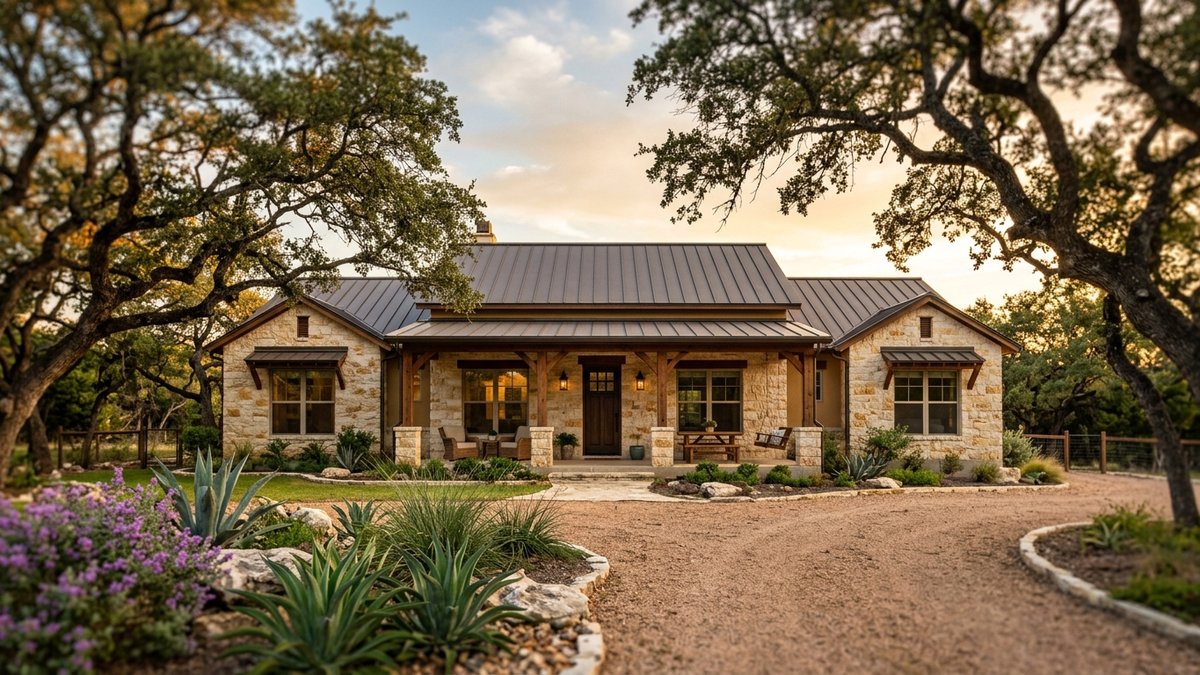
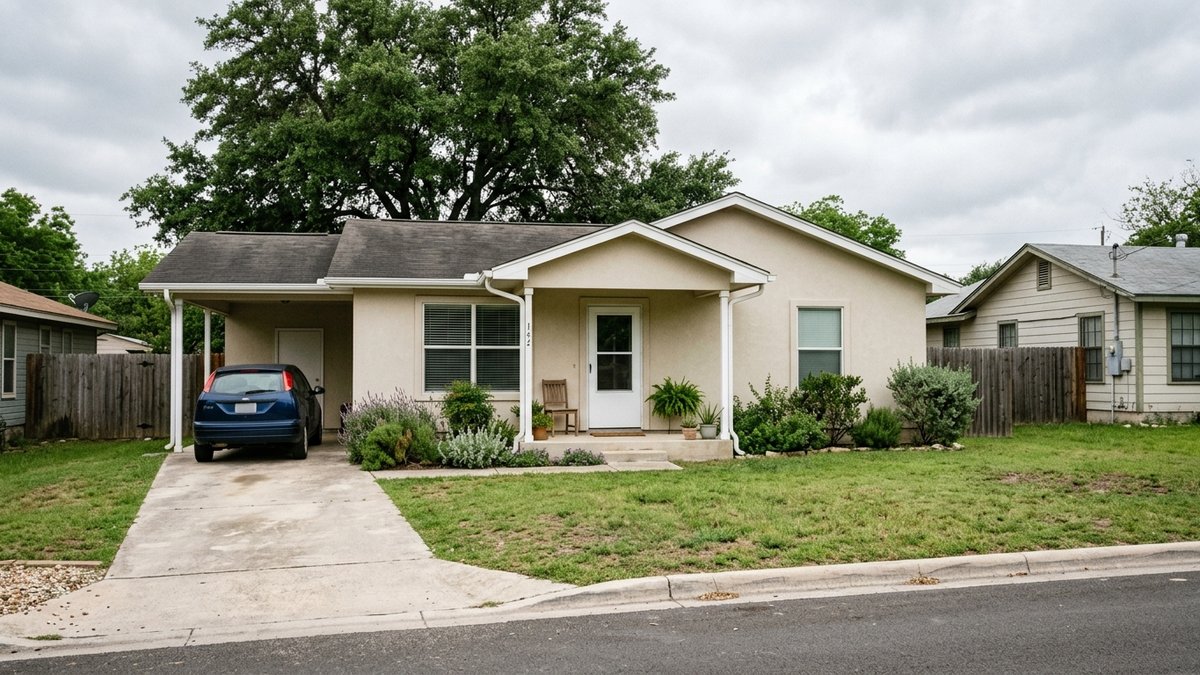
How should you compare homes near Gruene with central New Braunfels?
Start with two addresses, not two neighborhood names. Homes near Gruene and homes in central New Braunfels can both put you close to historic places, restaurants, events, and the parts of town people use often. That overlap can make an online search feel simpler than it is. The property, the street, and the route you will actually drive matter more than a broad map label.
The two historic settings are not interchangeable. The Texas Historical Commission traces Gruene to Henry D. Gruene’s 1870s cotton operation, mercantile, cotton gin, and dance hall; the community declined after the 1925 boll-weevil infestation and was revitalized beginning in the 1970s. Its historic district entered the National Register in 1975. Central New Braunfels grew from the town grid platted around Main Plaza in 1845. The commission describes its recently listed district as a 130-year mix of commercial blocks, fachwerk houses, Folk Victorian residences, Craftsman bungalows, and Art Moderne commercial buildings. In practical terms, a buyer near Gruene is comparing proximity to a distinct historic settlement and visitor destination, while a central buyer may be comparing a house within or near the original civic and commercial core. Confirm the exact address because neither description applies uniformly to every nearby property.
The useful question is which address fits the life you already have. One buyer may care most about being able to spend an ordinary evening near downtown. Another may want a particular home style, a quieter block, a renovation project, or a route that feels easy on a weekday. Neither choice is automatically better New Braunfels real estate. The best choice is the one that holds up after you compare the home and the daily routine together.
Before you narrow the search, review Glen’s Gruene community page and the broader New Braunfels homes for sale page. Then keep the comparison focused on the specific homes you could realistically buy.
What does the setting tell you about daily life?
The setting should be tested, not assumed. The City of New Braunfels describes downtown as a Main Plaza-centered area of shops, restaurants, galleries, music venues, and community events. Downtown access now has a measurable parking distinction: the City says select downtown on-street spaces use a digital paid system daily from 10 a.m. to 10 p.m., with the first hour free and later hours charged, while other free and paid options remain. A central address that depends on downtown curb parking therefore deserves a block-by-block and time-of-day check. Gruene access should be tested separately around the historic district and the events or destinations you expect to use; the downtown parking rules should not be assumed to describe a Gruene address.
Visit each finalist at the times you expect to use it. Make the drive to work or to the places you visit most. Walk a few blocks if walkability is important to you. If you expect guests, notice where they would park. If you are sensitive to activity, visit during a weekend or event period that is likely to show the area at its busiest. A quiet midweek showing can reveal a different experience than a Saturday afternoon.
This is not about assigning one area a lifestyle label. It is about checking the friction points that can affect your ownership experience. A home that looks close to a destination may have an awkward route, limited visitor parking, or a street pattern you do not enjoy. Another home may be a better fit because the trip you make most often is easier, even if it is farther from a place you visit occasionally.
For a relocation lens, Glen’s guide to moving to New Braunfels can help you list the regular trips and local priorities worth testing before you commit to an area.
Could historic status change your renovation plans?
It can, but you should confirm the address instead of guessing from the age or style of the home. The City of New Braunfels says exterior work affecting a designated local landmark or a property in a local historic district requires a Certificate of Alteration before the work begins. The City lists roof work, exterior alterations, additions, driveways, sidewalks, signs, and demolition among the types of projects that can be affected.
That is a due-diligence question, not a reason to rule out an older house. A well-kept older home can be exactly what a buyer wants. It does mean the exterior scope should be clear before you build a renovation budget around a new roof, windows, an addition, a driveway change, or a major landscape plan. Ask the City whether the exact property has a local designation or district requirement. Ask the seller for repair records and disclosures. Then let the relevant professionals address property-specific construction, legal, tax, or insurance questions.
Use this comparison when the condition or renovation potential is part of your decision:
| Question | Home near Gruene | Home in central New Braunfels |
|---|---|---|
| Is there a local historic designation or review requirement? | Confirm with the City for the exact address | Confirm with the City for the exact address |
| What exterior work is planned soon? | Read records and get property-specific estimates | Read records and get property-specific estimates |
| What condition issues need an inspection? | Compare the actual house, not the area label | Compare the actual house, not the area label |
| What is hard to replace? | Note the setting, lot, and house features | Note the setting, lot, and house features |
The point is to compare facts you can document. A general historic feel may be part of the appeal, but it should not hide a repair or approval question that needs an answer before you move forward.
What property details should you verify before making an offer?
Flood information, appraisal information, disclosures, and current condition all belong in the same comparison. FEMA calls its Flood Map Service Center the official public source for flood-hazard information and provides an address search. FEMA also notes that flood maps can be updated. Look up each address rather than treating either broad area as a flood-risk category. Then discuss insurance questions with an insurance professional using the exact property details.
For parcel information, Comal Appraisal District says its site contains property information within its jurisdiction and is updated each business day. The District also says it does not collect taxes for taxing authorities. That distinction matters. The appraisal record can help you start the address-level research, but it is not a full answer about the taxes, assessments, exemptions, or insurance cost that may apply to your purchase.
Keep the same comparison sheet for both homes. Put the current property record beside the seller disclosures, inspection findings, and any questions raised by the listing. If one home has a clearer maintenance history or fewer unknowns, that is part of the value case. If the other home has a location or layout you cannot replace, write that down too. You are deciding whether the complete ownership picture works, not merely whether the asking price looks attractive.
Glen’s New Braunfels flood-risk buyer guide is a useful next step for keeping the flood review tied to the property you are considering.
What is the best two-address decision process?
Use a short, repeatable process before you feel pressure to choose. It keeps the decision grounded when one house has more charm and the other seems easier on paper. You do not need to turn this into a complicated scorecard. You need a clear record of what you confirmed and what still needs an answer.
Use this checklist:
- Select one home near Gruene and one in central New Braunfels that fit the same general budget and move-in window.
- Visit each address during a normal weekday and at a time that reflects the activity you expect to live with.
- Check the route, parking, street feel, and the places you will use most often.
- Ask the City about any local historic designation or exterior-review requirement tied to the exact address.
- Look up each property in FEMA’s Map Service Center and review insurance questions with the appropriate professional.
- Pull the current appraisal record, then ask for current tax and assessment information for the specific property.
- Read the seller disclosures, compare inspection findings, and list the immediate work each house may need.
- Write down the feature you would have the hardest time replacing if you passed on each home.
That last step is often more useful than trying to declare one part of New Braunfels the winner. A particular lot, floor plan, historic setting, access pattern, or condition profile may matter far more than the label attached to the area. Once those trade-offs are visible, you can decide with more confidence and less guesswork.
If you want help putting two New Braunfels homes side by side, contact Glen Robison. The goal is a clear comparison of the property details, questions, and terms that matter before you write an offer.