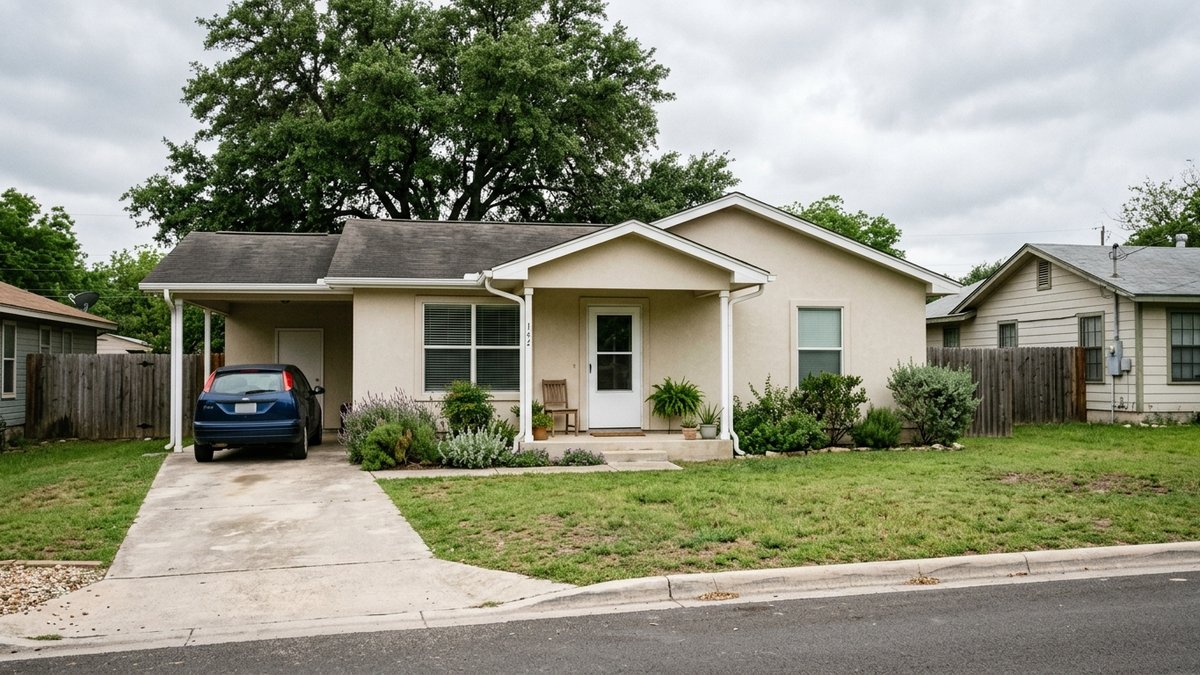
How can you check internet availability for a specific Hill Country home?
Start with the exact address, then confirm the answer with the provider. A New Braunfels mailing address or a familiar neighborhood name is too broad to settle whether the home you want can support your internet needs. Keep broadband on your property review list while you still have time to ask questions.
The FCC National Broadband Map is a useful first stop. Its address search shows providers, technologies and maximum advertised download and upload speeds reported for a location. Check that the location point matches the home you are considering. For an acreage property, make sure you are looking at the residence rather than treating a general view of the surrounding land as the answer.
Record the map’s Data As-Of Date along with the address and the providers shown. The FCC lets users select that date. A screenshot without a date can leave you unsure which version of the information you reviewed. Save the results as a starting list for provider calls, not as a completed service order.
This matters when comparing a house in town with a home toward Canyon Lake or another Hill Country location. You can use the same checking method for both, but each property needs its own answer. Copying the result from one address to the next defeats the purpose of an address-level review.
Glen’s guide to what to check before relocating to New Braunfels covers the broader location decision. Broadband deserves a separate check when your work or other essential activities depend on it. Write down those needs before contacting providers, so you can ask about a particular plan instead of asking whether the area has internet.
What should a provider confirm before you rely on the service?
Ask the provider to confirm the address, the offered technology and the available plan, then explain what has to happen to connect that home. A regional service-area page gives you a lead. The provider’s answer about the property gives you something more useful to evaluate.
GVTC, for example, lists New Braunfels, Canyon Lake, Spring Branch and other Hill Country locations on its service-area page and provides a Check Availability link. Its residential internet terms limit offers to select service areas. Those pages support checking with GVTC where relevant. They do not establish that GVTC serves every home within a named community.
Use the exact street address and any unit information. If the provider cannot identify the property, ask what information would let it review the location. For a home under construction or a property with several buildings, explain which building you want connected. Leave the answer open until the provider identifies the same place you are evaluating.
Keep a short provider contact sheet
Record these items for each provider you contact:
- The property address and building being reviewed.
- The date, contact name or reference number, and written reply.
- The technology and specific plan offered at that address.
- Equipment and installation questions still needing an answer.
- One-time charges, recurring charges and any quoted timing.
- The next step and the person responsible for answering it.
Ask for clarification when a reply says that service is planned, under review or available only after additional work. Keep those descriptions in the contact sheet. They mean different things to your move-in planning than a confirmed installation arrangement. You can discuss an unresolved service question with your agent without assuming that a sales page has settled it.
How do wired and wireless options fit your actual needs?
Compare the options the providers confirm for the home against the activities you need to perform there. The FCC’s fixed broadband map includes wired service, fixed wireless and satellite. Its mobile broadband map describes outdoor or in-vehicle coverage, so a mobile coverage area does not establish indoor performance at your proposed workspace.
Begin with the task that would cause a problem if the connection fell short. That might be a scheduled video meeting, sending large work files or using an employer’s required remote connection. Describe the task to the provider and, where relevant, to your employer’s technology team. Ask what information they need to assess the plan. Avoid choosing a property solely because an advertised download number looks large.
Keep the different kinds of evidence in separate columns:
| Evidence | What it helps you check | What still needs an answer |
|---|---|---|
| FCC location result | Reported provider, technology and advertised speeds | Current service confirmation for the home |
| Provider address reply | The specific option offered at that property | Equipment, installation and plan details |
| Installation explanation | The proposed work and arrangement | Remaining conditions and confirmed timing |
| Your usage requirements | The activities the connection needs to support | Whether the available plan is a workable fit |
For a home with a separate office, garage workspace or outbuilding, name that location during the conversation. Ask the provider what its proposed setup covers and which questions need a separate equipment review. Service to the residence and connectivity at your intended desk are related questions, but one answer should not be assumed to settle both.
If the seller shares a speed test or describes current service, record the circumstances and use that information to shape your questions. Ask the provider about your own proposed account and setup. Treat one test as information about that test, rather than a promise about every workday after you move.
Which installation and cost questions can change the property decision?
An option is more useful when you understand its installation requirements, charges and timing. Ask about those details before relying on the connection in your move-in plan. A provider may need to review the property or clarify the proposed work, and that unresolved step belongs in your comparison.
Ask whether the quote assumes an existing connection, whether an on-site review is needed and who will explain any additional work. For an acreage home, give the provider the relevant property details rather than guessing that a line near the road answers the question. Ask which details it needs to evaluate the connection to the residence.
Keep the estimate in writing where possible. Ask what the stated price includes, what could be charged separately and how equipment is handled. GVTC’s current terms, for example, say activation and installation fees may apply and that prices exclude certain taxes, surcharges and fees. The useful lesson is to read the terms attached to the offered plan, rather than carrying a headline price into your home budget.
Internet is one part of the property’s ongoing cost. Glen’s guide to utility costs for New Braunfels homeowners can help you organize the wider household budget. Keep the broadband quote separate so a general utility estimate does not hide an unknown installation charge.
Discuss timing with the people responsible for each part of the move. The provider explains its installation arrangements. Your agent or another qualified transaction professional can discuss how an unanswered property question fits the purchase timeline. Glen’s guide to what happens after a Texas offer is accepted helps organize those other steps. Ask about the signed agreement and your specific circumstances before drawing any conclusion about a deadline or purchase right.
What should you do when the map and provider give different answers?
Keep the conflicting answers and ask for clarification. The FCC explains that its map shows availability rather than network performance or affordability. Its challenge process addresses inaccurate availability information, while a missing or incorrect location has a separate correction route.
Save the address result, its date and the provider’s reply. Describe the exact difference. Is the provider declining service, offering a different technology or asking for additional work? A clear question is easier to investigate than a general statement that the map is wrong. The FCC’s guidance describes supporting documents and screenshots as useful evidence when submitting a challenge.
A map correction process is separate from deciding whether a home fits your needs. Do not treat a submitted challenge as a confirmed connection or a scheduled installation. Continue to ask the provider what it can offer now and what remains unresolved. If internet is essential to your work, bring that uncertainty into the property discussion.
Before comparing two homes, mark each broadband question as confirmed, waiting for an answer or unsuitable for the use you have described. A house with an appealing office can still leave an essential service question open. An attractive room, a neighborhood name and a provider logo each tell you something different from a property-specific reply.
Bring the contact sheets, provider terms and unanswered questions to your next home-search conversation. Glen can help you organize the property questions and the next steps with the appropriate people. Keep technical suitability with the provider or a qualified technology professional, and keep transaction questions with the person reviewing your purchase. Retain the actual answers for the address you choose.